Clifton · Bosque County
The Lights Are On. Somebody Paid the Bill.
Behind Clifton’s art, performances and local history are people doing the everyday work of keeping a place alive.
By Clayton Hollingsworth
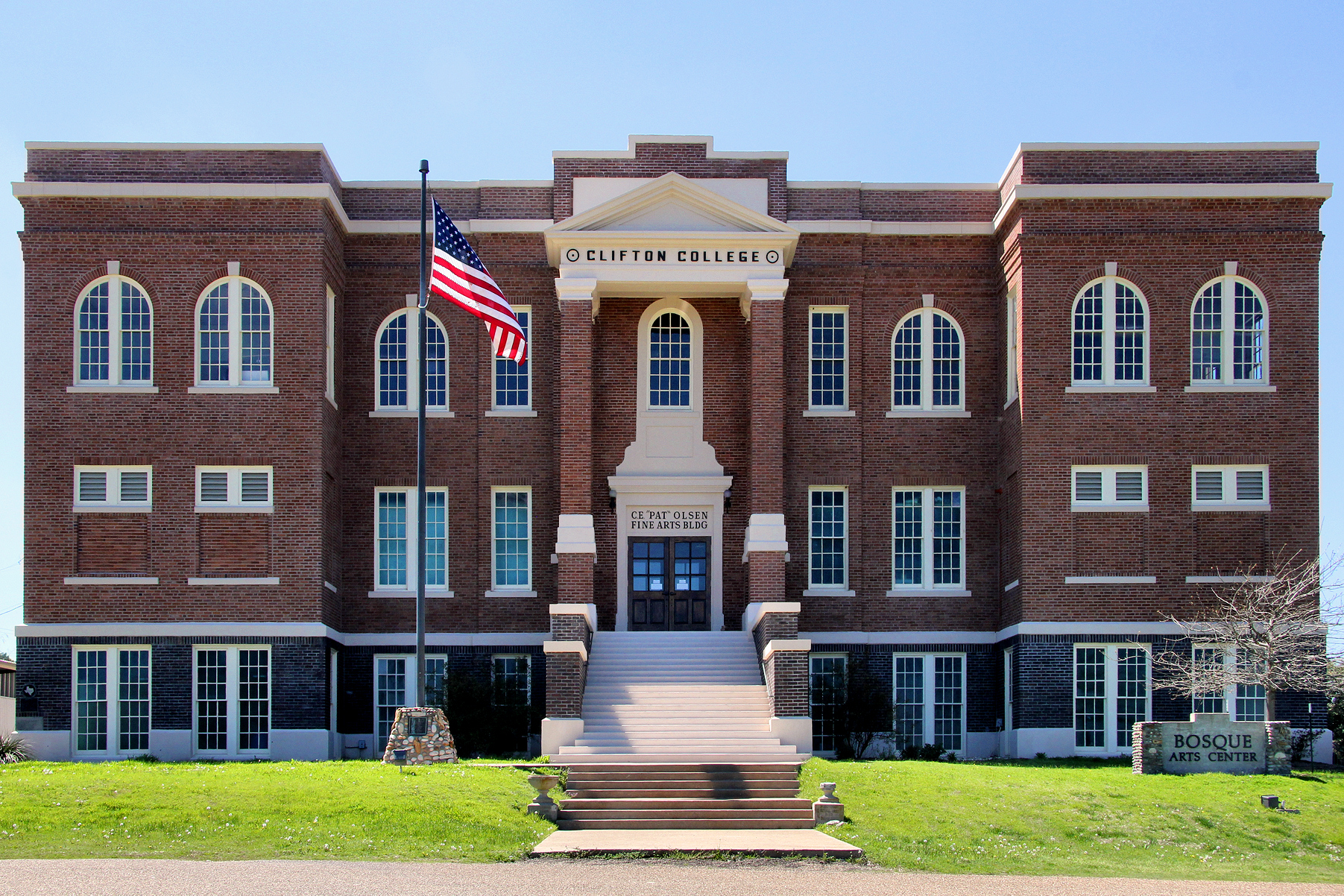
I went to elementary school in Clifton, and some of the historic places there were destinations on childhood field trips. Living back beside Lake Whitney has put them close to home again. Returning as an adult brings a different question into view: who makes sure another child gets to walk through those doors?
It is easy to admire a town’s cultural life from a comfortable distance. There is a handsome building, an exhibition, a performance worth the drive. The work behind those pleasures is less likely to make the photograph. Somebody has to organize the calendar, recruit the volunteers, and answer the phone. Somebody has to pay the bill.
Sources: Clifton, Rain or Shine — existing UNSUPERVISED article
A place to make things
At the Bosque Arts Center, that work has a long history. Artist and photographer Joan Spieler helped bring the center into being, and Pat Olsen donated the former Clifton Lutheran College property. The organization began in 1981, giving a 1923 college building another purpose.
That is an appealing inheritance: a building made for learning continuing to invite people to try something. The question worth asking today is how many different people can find their way into it—and what might keep others outside.
Sources: Bosque Arts Center — History · Bosque Arts Center — About
Applause has a backstage
The Tin Building Theatre offers one answer. Its volunteers act and direct, but they also make sets, costumes, and publicity. The group welcomes involvement without previous theatre experience. The Arts Center’s 2026 camp offerings included theatre, pottery, sewing, and music.
There are several ways into that kind of community. Someone wants the spotlight. Someone else would prefer a paintbrush and clear instructions. Both can help make an evening possible. A useful giving story should introduce us to those people and explain what makes their work easier.
It should also leave room for enjoyment. A cultural institution earns part of its place in our lives by giving us something to look forward to. That is a perfectly serious reason to support it.
Sources: Tin Building Theatre · Bosque Arts Center — Classes
What the recent record tells us
The Arts Center’s October newsletter reports that September’s Bosque Art Classic sold 72 of its 212 exhibited works. It also reports more than 300 people at the September 17 Waco Symphony concert.
Those figures show activity: art finding buyers, people coming together for music. They leave other questions open. How many were first-time visitors? What did it take to present the programs? Could someone attend if cost or transportation were a problem? Numbers become more useful when we know what they measure and what they leave out.
Sources: BAC News — October 2026, pp. 4 and 6
The collection needs a human voice
The Bosque Museum offers a related story. Jacob Olson’s 1924 gift to Clifton Lutheran College required his collection to stay in Bosque County and have a fireproof home. The museum building that followed opened in 1957.
Keeping an object is one responsibility. Helping somebody understand it is another. The museum’s docents guide tours, assist with events, and support student learning. School visits can be shaped around grade level, interests, and time available.
I knew some of these places first as a child on a field trip. A school outing has adults behind it: people arranging the visit, preparing to receive the class, and finding a way to hold children’s attention. That work deserves a place beside the objects in the story.
Sources: Bosque Museum — About · Bosque Museum — Docents · Bosque Museum — School Group Tours
Give the open door a future
The Arts Center says membership dues help maintain and operate its historic home. Its giving form offers general support and an endowment option, along with gifts honoring or remembering someone. The museum also offers donations, memorial gifts, memberships, and docent involvement.
The next step can be modest and specific. Check the program calendar. Choose a performance. Ask what a volunteer commitment involves. Become a member of a place you want to keep using. If you are considering a gift, ask the staff what would help now and how they would use it.
No emergency needs to be invented to make that invitation matter. Cultural life requires attention even when the doors open on time and the program goes beautifully.
For The Giving Fields, that is where this story begins: with the people doing the work and enough practical information for the rest of us to join them. I want the next child’s field trip to have somewhere to go.
Sources: Bosque Arts Center — About · Bosque Arts Center — Donate · Bosque Arts Center — Join · Bosque Museum — Support · Bosque Museum — Membership · Bosque Museum — Docents
Sources & further reading
Public materials reviewed October 13, 2026.
- Clifton, Rain or Shine — existing UNSUPERVISED article ↗
- Bosque Arts Center — About ↗
- Bosque Arts Center — History ↗
- Tin Building Theatre ↗
- Bosque Arts Center — Classes ↗
- BAC News — October 2026, pp. 4 and 6 ↗
- Bosque Arts Center — Staff ↗
- Bosque Arts Center — Directors ↗
- Bosque Arts Center — Contact ↗
- Bosque Arts Center — Donate ↗
- Bosque Arts Center — Join ↗
- Bosque Museum — About ↗
- Bosque Museum — Our Team ↗
- Bosque Museum — Docents ↗
- Bosque Museum — School Group Tours ↗
- Bosque Museum — Support ↗
- Bosque Museum — Membership ↗
- Bosque Museum — Education ↗