In the Fields / feature
Big Bend Conservation Alliance
Who Gets to Protect the Big Bend?
Big Bend Conservation Alliance connects environmental care with the people, histories and everyday decisions that shape Far West Texas.
The work, made visible
A river. A classroom. A connection.
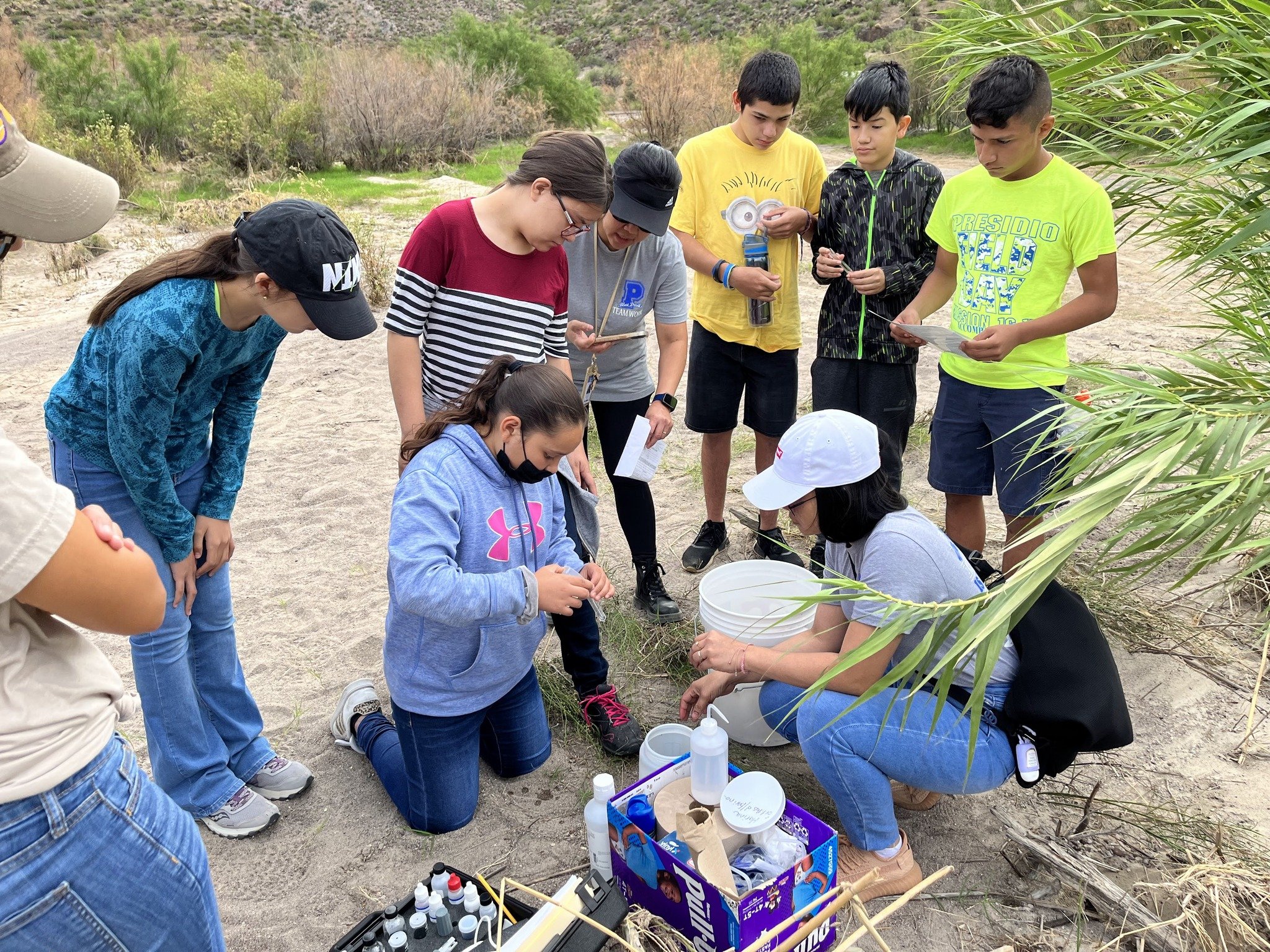
River Rangers brings environmental learning into the landscape students call home.
Published program model · reviewed October 2026
4High-school communities reached
Presidio, Marfa, Alpine and Terlingua: four communities named in the program description.
BBCA · Big Bend River RangersPublished program model · reviewed October 2026
MonthlyRio Grande water sampling
The published program model describes monthly student visits to sample water at Colorado Canyon.
BBCA · Big Bend River RangersHow the work connects
Hear from experts
Guest speakers connect environmental science with the Big Bend.
Collect samples
Students visit the Rio Grande at Colorado Canyon.
Test the water
Water-quality work turns a field trip into hands-on learning.
These measures describe the published River Rangers program model, not an annual tally of completed trips or an organization-wide beneficiary count.
How to read these numbers
These figures describe the organization’s reported activity or service reach. Each keeps its own reporting period and definition. They are not a ranking, a count of identical outcomes, or a promise of what a particular gift will buy.
The Short Version
Community-centered conservation of Far West Texas land, water, dark skies and cultural heritage, including youth river stewardship and Indigenous preservation partnerships.
A landscape with neighbors
The Big Bend can look, from a distance, like an invitation to escape: desert horizons, mountains and the Rio Grande. Big Bend Conservation Alliance begins closer to home. Its purpose places the region’s communities inside the work of protecting land, water, dark skies and culture. That approach asks a useful philanthropic question: who has the opportunity, authority and resources to care for a place?
Founded in 2015 amid opposition to the Trans-Pecos Pipeline, BBCA acknowledges that its early advocacy took a side in a divisive fight. Its account of the organization’s development now emphasizes projects that bring communities together. The shift helps explain a portfolio that includes school science, neighborhood planting and cultural preservation alongside more recognizable conservation work.
The river as a classroom
The Big Bend River Rangers program makes stewardship tangible. Students learn from environmental specialists and travel to monitor water quality in the Rio Grande and other regional locations. BBCA describes a program that grew from a Presidio middle-school pilot into high-school participation in Presidio, Marfa, Alpine and Terlingua. A related collaboration introduces younger children to outdoor activities.
The philanthropic value of that model extends beyond a single outing. Repeated observation gives young people a way to ask questions about the water around them and acquire practical experience answering those questions. The program connects classroom learning to a living place. Its future depends on the ordinary work behind those experiences: relationships with schools, knowledgeable adults and the capacity to keep showing up.
Preservation includes the people who belong to a place
In Presidio, BBCA’s partnership with the Lipan Apache Tribe of Texas and family descendants supported the return of Cementerio del Barrio de los Lipanes to the Tribe and the creation of a historical marker. Its published project account also describes completed preservation work designed to protect the burial site and provide space for gathering and reflection.
This is an especially important part of the organization’s identity. Cultural preservation involves authority as well as interpretation: descendants and Tribal partners belong at the center of decisions about ancestral places. The cemetery project shows why environmental philanthropy can require knowledge of history, attention to ownership and patient collaboration. The people connected to the land are participants in its future, with responsibilities and claims that a scenic photograph cannot explain.
Dark skies, practical choices
BBCA also coordinates Lights Out Texas in the Big Bend, encouraging residents to reduce unnecessary nighttime lighting during bird migration. The regional effort includes educational materials available through local libraries. It gives households a manageable point of entry into a problem whose scale otherwise can feel remote.
Taken together, these projects suggest an organization built around participation. Water sampling, care for an ancestral cemetery and changes to outdoor lighting are different activities, but each connects a large concern to a specific action. For donors, that is an invitation to look beyond the beauty of the landscape and ask whether the people doing its daily stewardship have durable support.
Where support begins
BBCA’s official staff page lists Christina Hernandez as Executive Director and Lisa Kettyle as Director of Development and Communications. The organization’s published general email and phone provide a route for questions about priorities, partnerships and the work donors can help sustain.
The giving link leads directly to BBCA’s Network for Good donation form, reached from its official website. The form offers one-time and monthly gifts and lists its own available designations. Donors with a particular project in mind should discuss that intention with the organization. The central opportunity is to sustain the local relationships that make a broad conservation mission practical, credible and rooted in the Big Bend itself.
The people behind the work
Leadership & contacts
Select a person’s card to open their official leadership page. Public roles and contact routes reviewed 2026-10-12.
Christina Hernandez
Executive Director
Open leadership sourceLisa Kettyle
Director of Development and Communications
Open leadership sourceConnect with the organization
info@bigbendconservationalliance.org432-558-8328Contact the organization ↗Use the organization’s public contact route for profile inquiries, partnerships and introductions.
More than one way in
Bring what you can.
Participation routes checked October 13, 2026. Contact the organization for current availability and requirements.
Where the work reaches
Selected places named in the tree-planting program; not a complete service-area list.
Jeff Davis counties.
Check the organization’s geography ↗Put generosity within reach
Give directly.
Stay connected.
Official website links to this Network for Good form. One-time and monthly gifts; use the organization's listed designations or contact staff about a specific project.
Give to BBCA ↗Your gift is handled by the receiving organization. UNSUPERVISED* does not process it or take a percentage.Go to the source
Read further.
Organization-published sources, reviewed 2026-10-12.