Two hundred fifty years ago, the Fourth of July did not arrive in my family with matching shirts, cold watermelon and a group text about where to park.
The man family research currently identifies as my sixth-great-grandfather, Daniel Perry II, died in South Carolina in 1827. His widow was left to navigate an estate whose inventory included land, livestock, debts, household goods and legal control over human lives. A surviving estate transcription names at least nine enslaved people: Thomas Taylor, Jesse, America, Rachel and two children whose names were omitted, Mingo, Thomas Prigman and Arthur.
Those people were valued at $4,050 in an estate inventoried at $5,115.75—nearly four-fifths of its recorded value. The arithmetic is obscene because the system was obscene. The ledger converted parents, children, labor and possible futures into collateral that could be hired out, transferred or sold.
Family memory has long described a much larger enslaved community around this branch. The record presently in hand does not prove the often-repeated figure of forty-something people, so I will not print it as fact. The smaller documented number is not a softer history. It gives us names, omissions and a structure of ownership we are obligated to face.
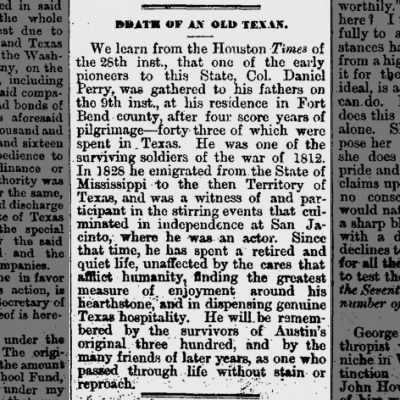
Daniel Perry III, the man family research identifies as my fifth-great-grandfather and Daniel II’s son, came to Texas in 1832, served in the Texas Army in 1836 and later held local office in Fort Bend County. The 1850 census recorded four enslaved people in his household—a woman of sixty-five, a man of forty, a woman of thirty-five and a man of thirty-four—while withholding every name.
He lived through emancipation and died in 1869, four years after slavery was abolished throughout the United States. His generation watched the legal world change. Whether their moral understanding kept pace is a different question.
That is not a footnote to my family story. It is the family story—beside military service, land, marriages, courthouse work and the generations that followed. Today, descendants of enslaved people are members of my family. The world can turn toward belonging in ways our ancestors could not—or would not—imagine. It is beautiful when it does, and frightening when it does not.
Independence without authenticity can become another costume: impressive from the road and uninhabitable inside. Authenticity is not permission to ignore obligation. It is the harder decision to tell the truth about who we are, accept what our freedom costs other people and repair what our inheritance left unfinished.
That matters to me as a father. I want Perry Kate to become independent enough to question the stories she inherits—including mine—and secure enough to know that honesty will not cost her my love. I cannot ask her to live truthfully while teaching her a cleaned-up family history. Guidance gives her the tools; trust gives her room to use them.
So I celebrate independence without pretending it arrived finished. Freedom is not an heirloom we place safely on a shelf. It is a house under permanent repair, and every generation eventually learns where the tools are kept.
The honest way to love a country—or a family—is to refuse the lie that love requires amnesia.
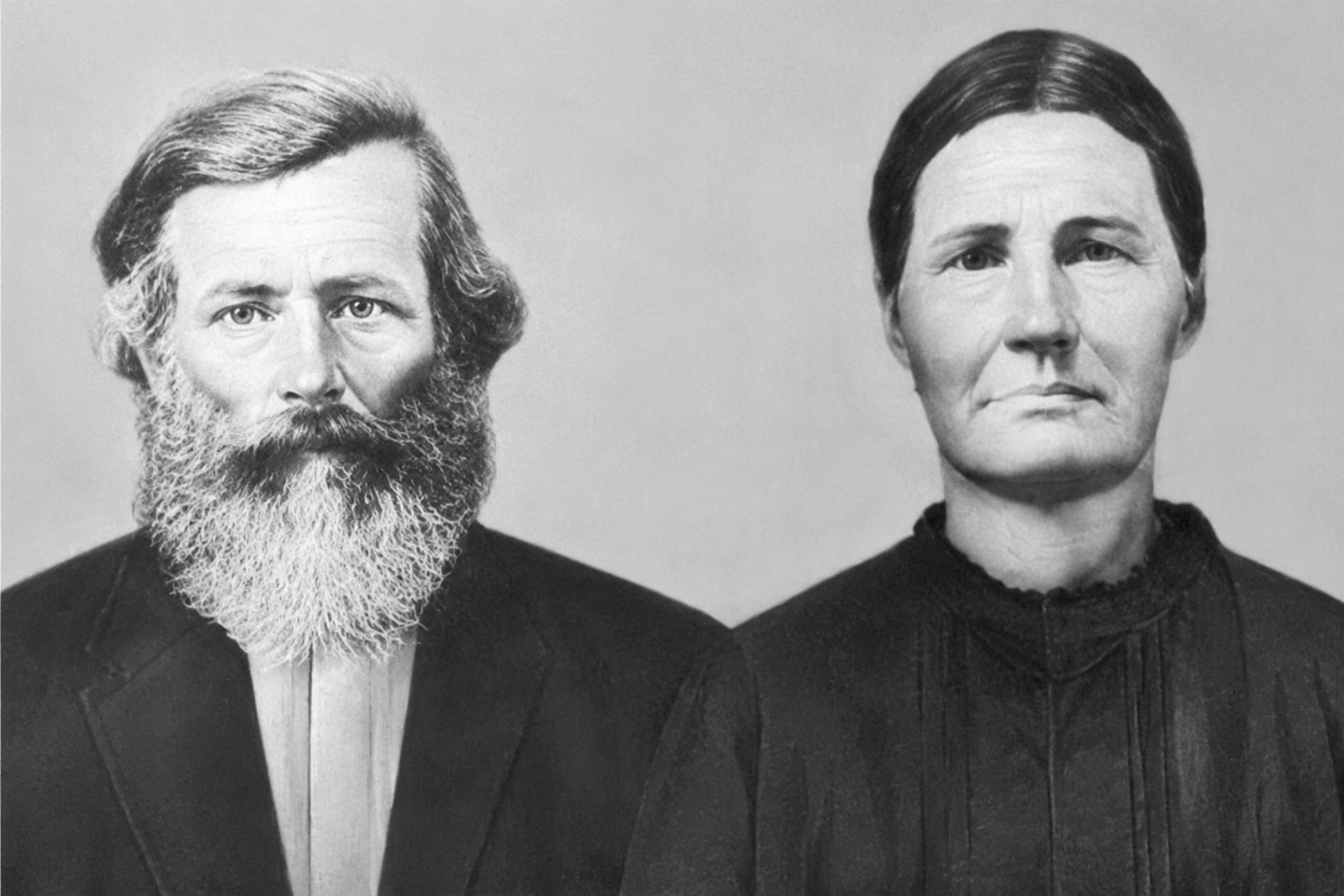
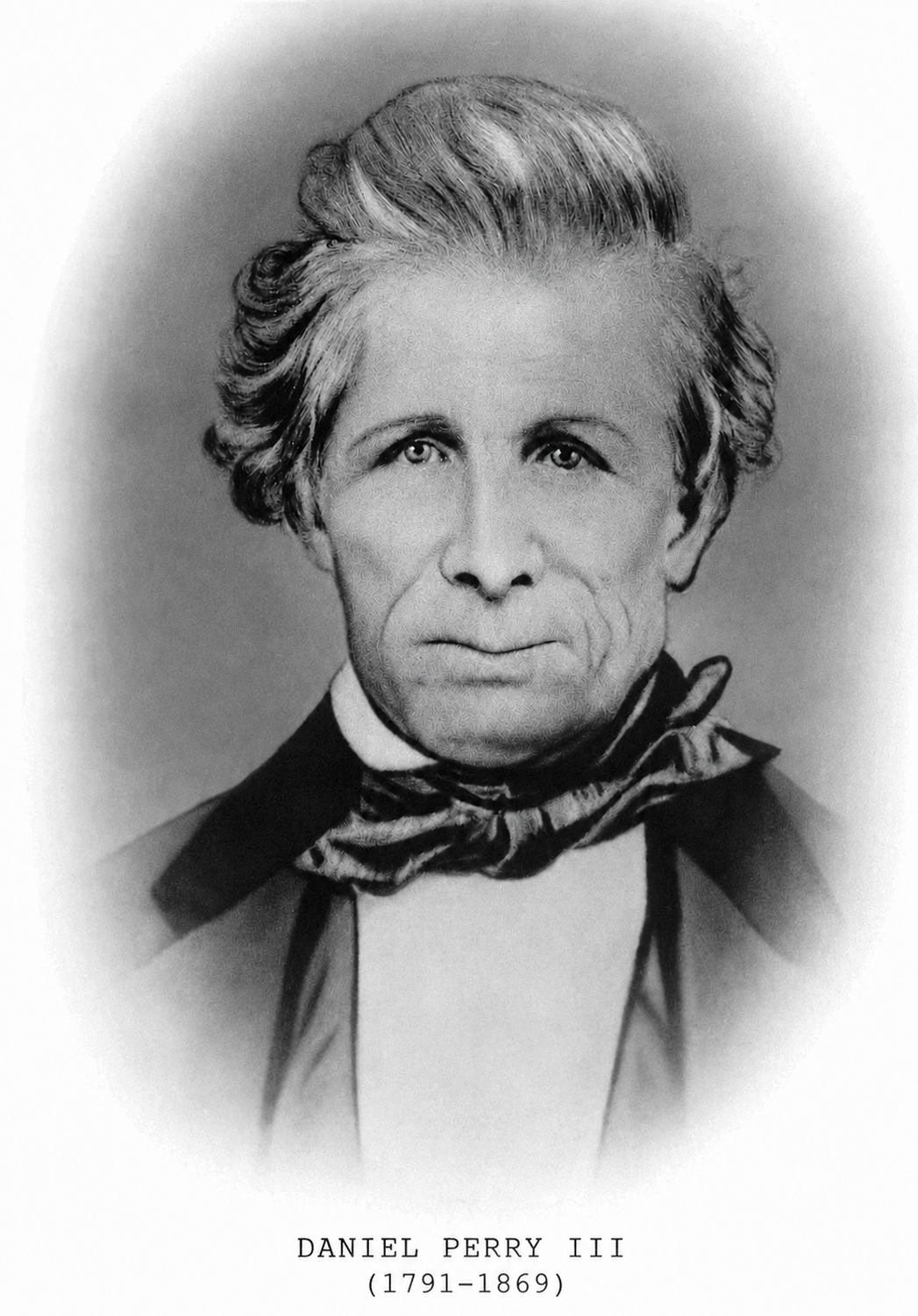 Interpretive image prepared from family research; not a surviving photograph.