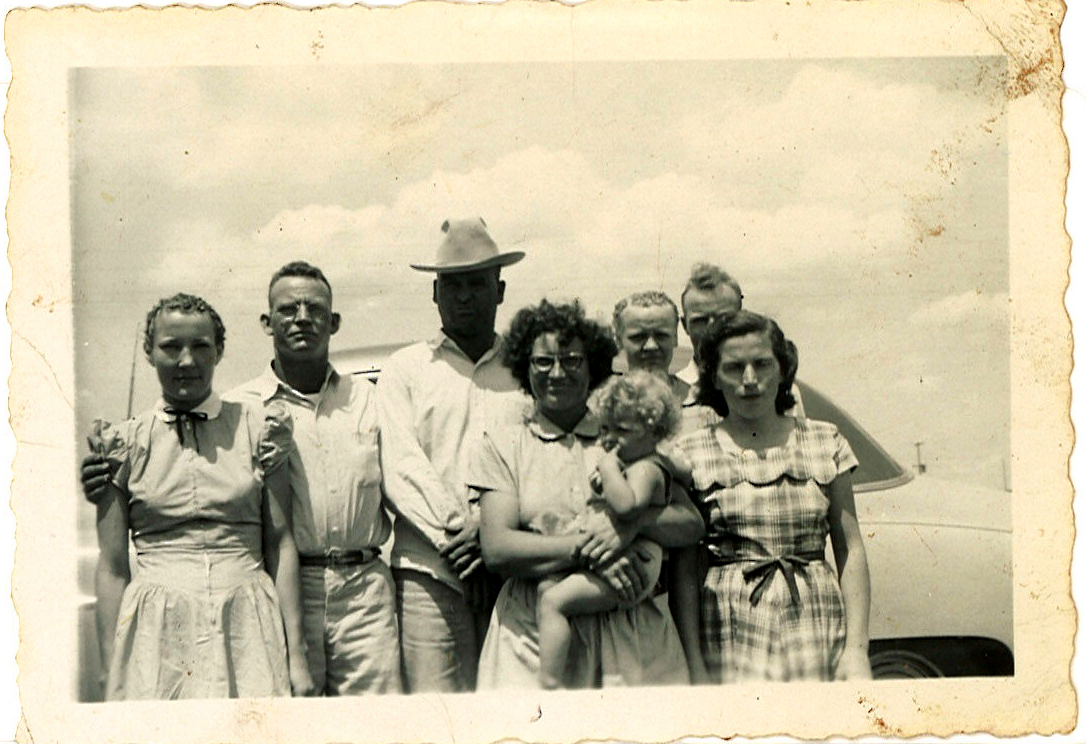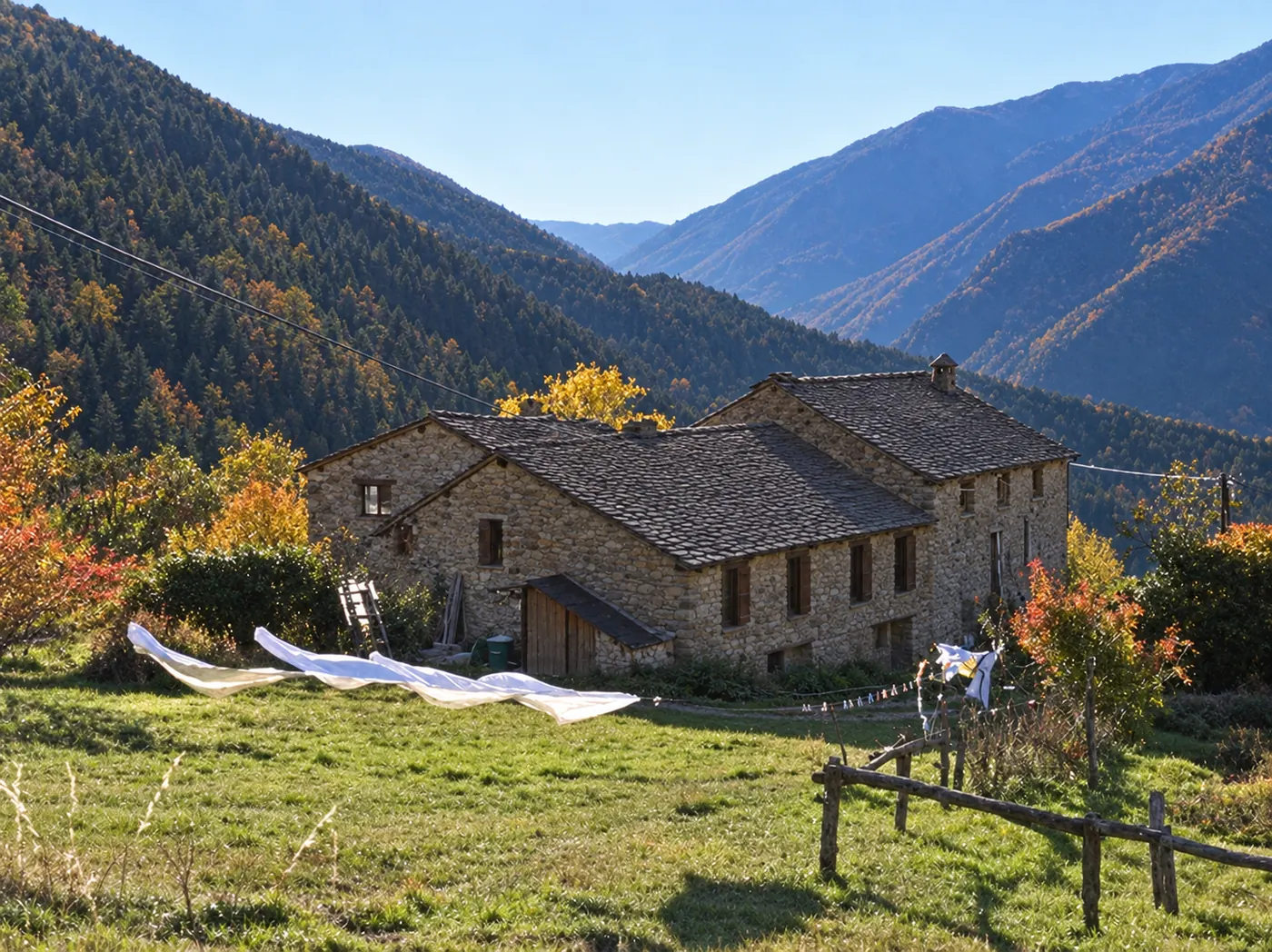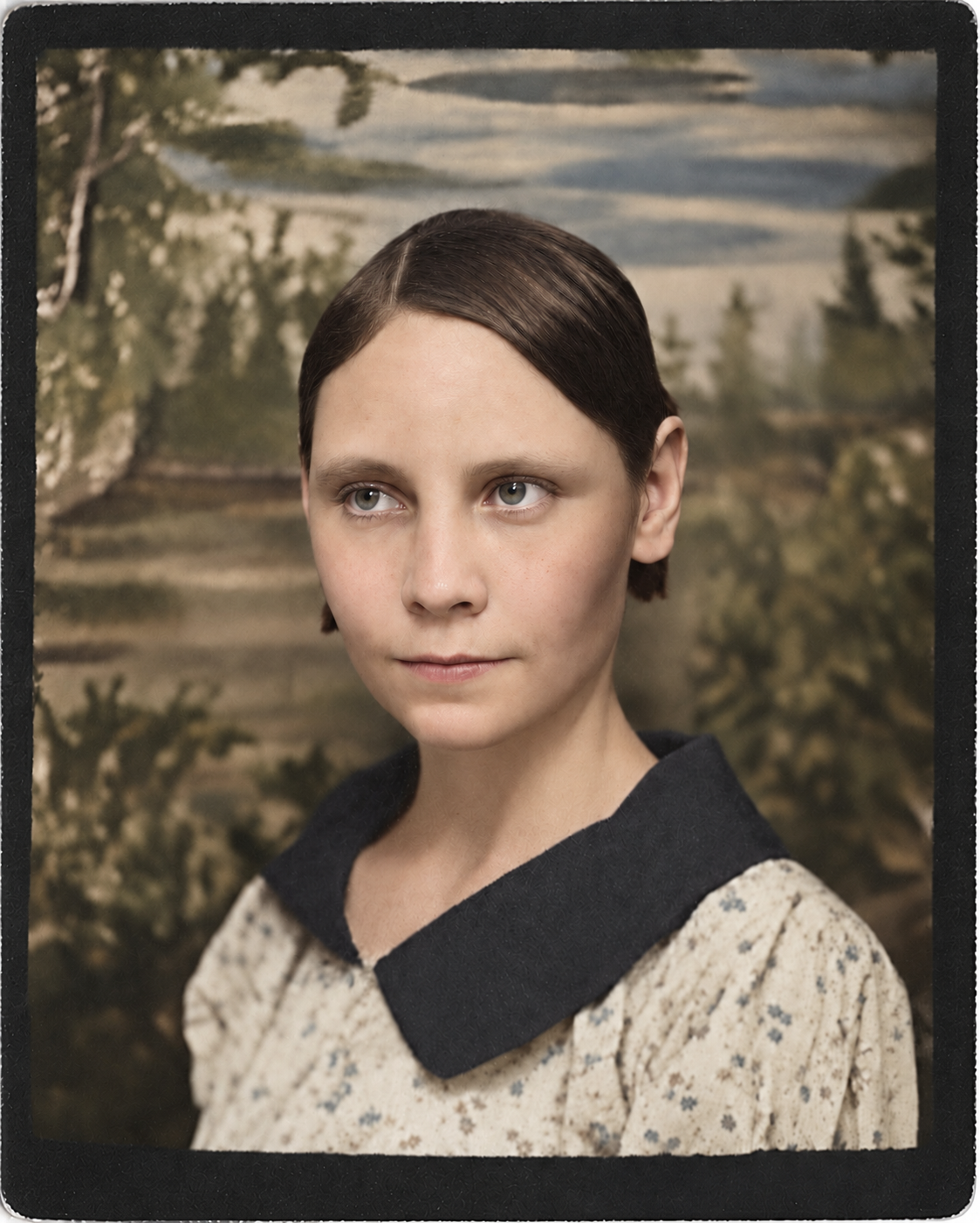
My paternal grandmother Wanda Perry grew up seventeen miles from Aspermont on the Perry Ranch. Seventeen miles was the distance to school, activities, supplies and the portion of the world that arrived on a schedule.
She rode the school bus seventeen miles each way. Sometimes the driver stopped for drinks or candy and quietly bought something for the children who had no money. That detail does more than decorate the story. It explains how rural infrastructure actually works: the route is official; the mercy is personal.
At home, my great-grandmother Euna Mae Carden Perry worked the fields, kept the books, ran the house, sewed clothes, carried water, heated it on a wood stove, packed lunches, pulled cotton and sacked peanuts. Her husband, my great-grandfather Raymond Perry, taught the children to drive the grain truck around eight or nine, starting them in what the family called granny gear. He built a floating deck on the stock tank so they could swim.
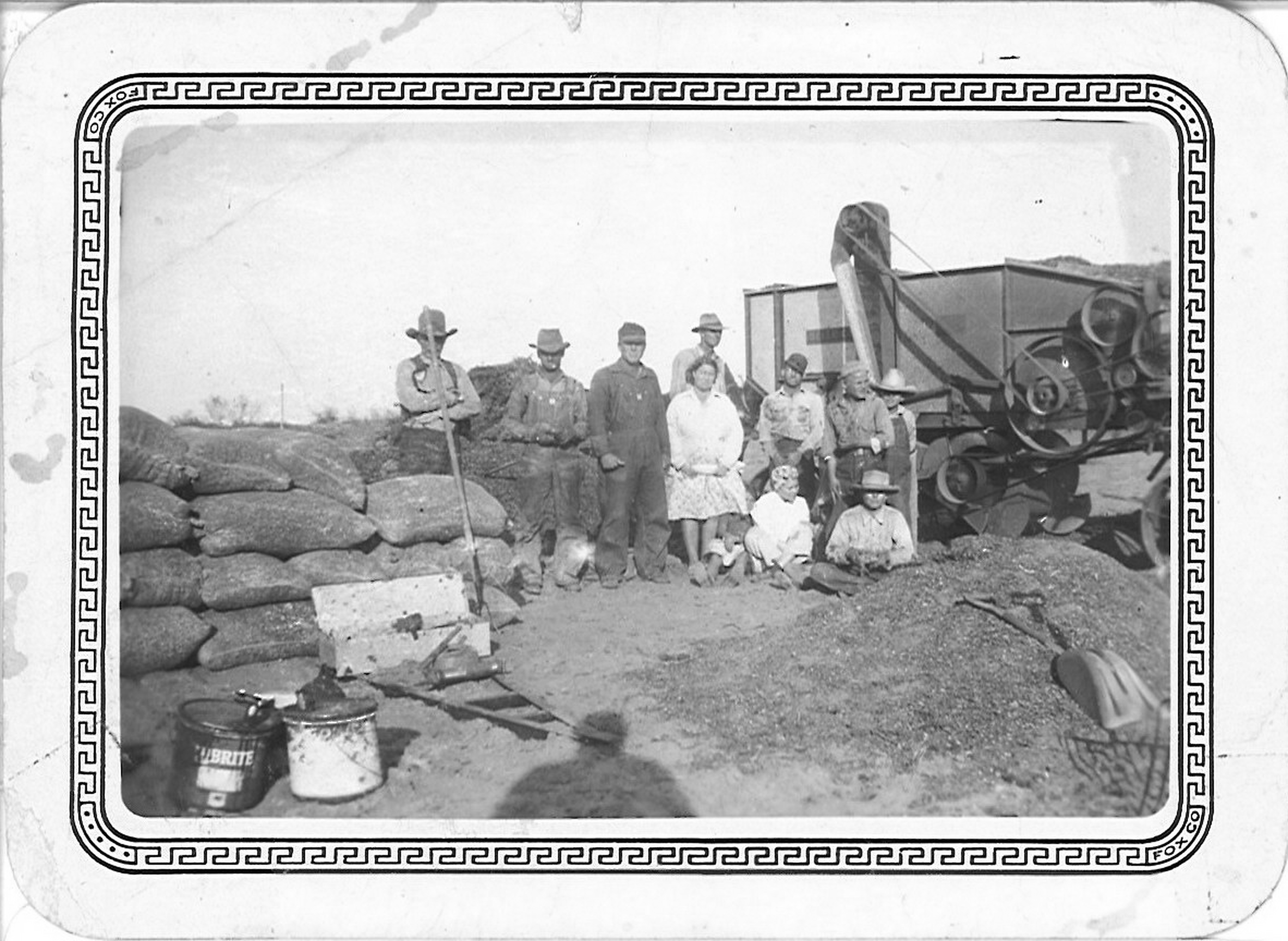
A restored family photograph gives that labor a setting: sacks and loose peanuts, belt-driven machinery, tools and a group pausing long enough for the camera. It shows Raymond; his father, my great-great-grandfather Jim Perry; Raymond’s brother Otis, my great-granduncle; and Ramon, a favored migrant farmworker the family welcomed back for each harvest season. Jim’s death in 1943 and the visual evidence place the scene at approximately 1938–1943.
Ramon’s presence matters. Agriculture is often narrated through the family that held the deed while the workers who made harvest possible become anonymous. Here, family memory preserved his name. The photograph asks us to preserve his place in the work as well.
When the children became teenagers, Raymond built a house in town so they could participate in school activities. Distance had become an operating expense of childhood, and he changed the family’s infrastructure rather than asking the children to make smaller lives.
Wanda later said they were never rich in money, but what her father gave them was worth more than any gold. That is not nostalgia talking. It is a precise accounting of attention, ingenuity and the cost of making opportunity reachable. The lesson reaches my own work now: if an institution claims to serve rural people, mileage, fuel, time and human dignity belong in the budget.
The road was not outside their life. The road determined the shape of it.